If you’ve been told you need a dental crown, you might be wondering:
✨Is it really necessary?
✨Which crown is best for my tooth?
✨What will the procedure feel like?
You’re not alone. Dental crowns are among the most common restorative treatments for adults where tooth decay, cracked teeth, worn fillings, and cosmetic concerns are frequently seen.
Why Might You Need a Dental Crown?
A dental crown is recommended when a tooth is too damaged to be restored with a filling alone.
Common reasons include:
- Large cavities that weaken the tooth
- Cracked or fractured teeth (often due to grinding or clenching)
- Teeth weakened after root canal treatment
- Old or failing fillings
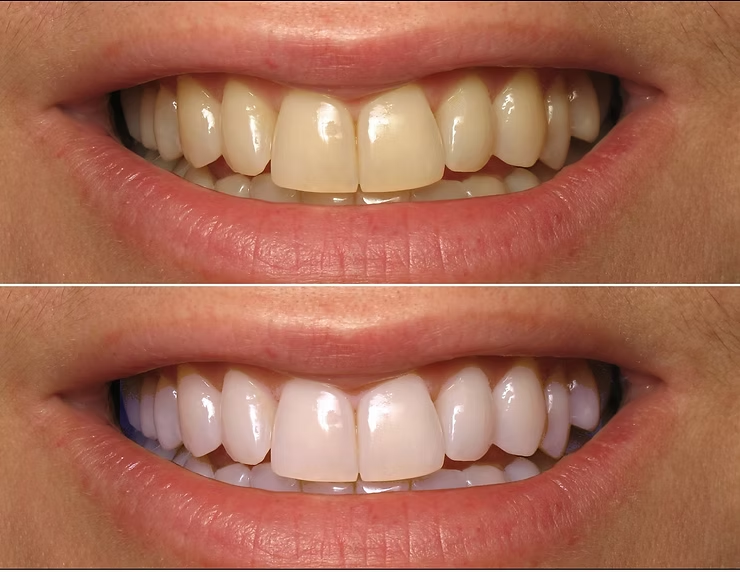
- Cosmetic concerns related to shape, color, or alignment
- Worn-down teeth due to acidity or bruxism
- Broken cusps from chewing hard foods
Types of Dental Crowns
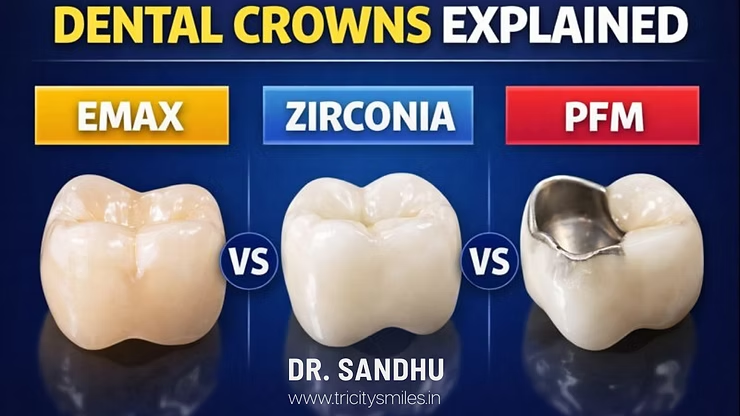
1. Zirconia Crowns
Best for: Molars, premolars, and select front-tooth restorations
Advantages
- Very high strength
- Natural appearance (especially layered zirconia)
- Resistant to chipping
- Suitable for patients who grind their teeth
- Good color stability
Limitations
- Slightly higher cost compared to traditional options
- Veneered zirconia may chip under extreme bite forces
2. E-Max Crowns
Best for: Front teeth and high-esthetic zones
Advantages
- Excellent esthetics
- Translucency similar to natural enamel
- Metal-free and biocompatible
Limitations
- Less suitable for heavy-grinding molars
- Not ideal for severely damaged teeth
3. Porcelain-Fused-to-Metal (PFM) Crowns
Best for: Molars requiring durability with moderate esthetics
Advantages
- Long clinical track record
- Strong internal support
- More affordable than all-ceramic options
Limitations
- Metal margin may become visible over time
- Less natural appearance than ceramic options
- Porcelain layer may chip
4. Full Metal Crowns (Gold or Non-Precious Alloys)
Best for: Back molars where esthetics are not a concern
Advantages
- Excellent durability
- Minimal tooth reduction
- Gentle on opposing teeth
Limitations
- Metallic appearance
- Less commonly chosen today
Dental Crowns Comparison Table
| Crown Type | Best Suited For | Esthetic Outcome | Strength | Typical Longevity | Key Notes |
| Zirconia | Molars & select front teeth | High | Very high | Long-term | Most commonly chosen |
| E-Max | Front teeth | Very high | Moderate | Long-term | Best cosmetic option |
| PFM | Back teeth | Moderate | High | Long-term | Metal margin may show |
| Metal / Gold | Molars | Low | Very high | Long-term | Highly durable |
What Is the Crown Procedure Like?
1. Consultation & Digital Scan
- Assessment of tooth strength
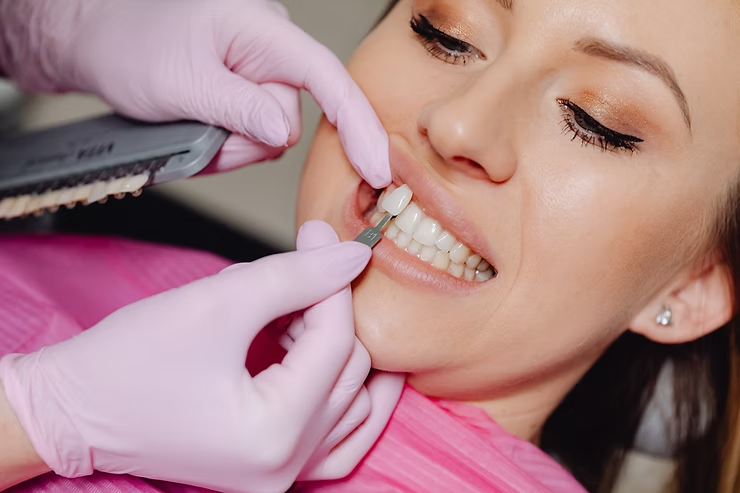
- Discussion of crown material options
2. Tooth Preparation
- Removal of damaged or decayed areas
- Shaping of the tooth
- Typically painless under local anesthesia
- Digital scan (no traditional impression trays)
3. Temporary Crown Placement
- Protects the prepared tooth
- Allows evaluation of bite and comfort
4. Final Crown Placement
The permanent crown is evaluated for:
- Fit ,Bite, Color, Comfort
Once approved, it is permanently cemented.
5. Aftercare
- Mild sensitivity may occur initially
- Normal brushing and flossing can be resumed
- Sticky foods should be avoided briefly
How Long Do Dental Crowns Last?
Dental crowns are designed to be long-lasting restorations. Their durability depends on:
- Oral hygiene practices
- Grinding or clenching habits
- Dietary choices
- Regular dental check-ups
With proper care and professional maintenance, crowns can function effectively for many years.
What Influences Crown Selection?
Crown selection depends on:
- Material type
- Tooth location
- Bite forces
- Esthetic expectations
- Amount of remaining tooth structure
- Financial consideration
Related Services at Tricity Smiles Dentistry
- Implants
- Zirconia, ceramic, and PFM crowns
- Smile enhancement
- Tooth-colored fillings
- Full-mouth rehabilitation
⭐ What Our Patients Say
“I had concerns about the black line near my gums. Dr. Sandhu explained me that it was the metal from my PFM crown which was showing. I decided to go for a zirconia crown and now it looks so natural that no one can tell it’s not my real tooth. The entire process was smooth and painless.” — Mrs. Sarita
About Dr. Sandhu & Tricity Smiles Dentistry
Dr. Sandhu is a US-trained dentist with over 20 years of experience, known for high-quality restorative and cosmetic dentistry. At Tricity Smiles Dentistry, treatment is guided by digital planning, advanced materials, and precision-based care for predictable outcomes.
📍 House No. 109, Sector 28-A, Chandigarh
📞 +91-7686828000
🌐 https://www.tricitysmiles.in
🗺 https://maps.app.goo.gl/WQGZKryUBPBN954F9
❓ FAQs
- Is a crown always needed after a root canal? Often yes. Root-canal-treated teeth are more fragile and benefit from crown protection.
- What is the best crown for front teeth? E-Max or layered zirconia crowns are commonly preferred for esthetics.
- Are zirconia crowns safe? Yes. Zirconia is biocompatible and well tolerated by gum tissues.
- Can crowns develop cavities? Crowns do not decay, but cavities can form at their margins if oral hygiene is inadequate.
- Does the crown procedure hurt?The procedure is usually painless under local anesthesia.