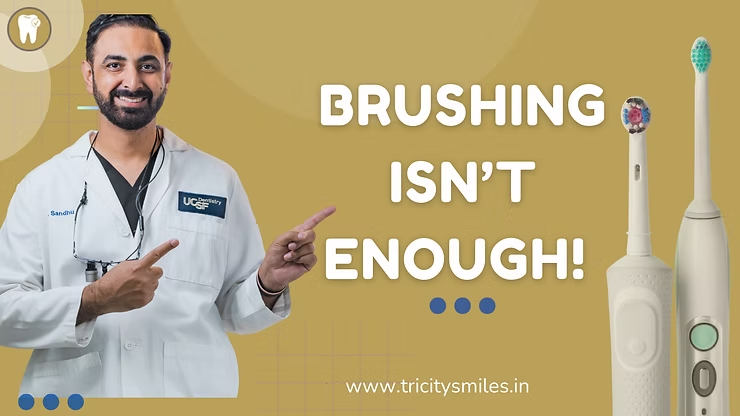
Many people brush their teeth twice a day yet still experience bleeding gums, bad breath, or cavities between teeth. This often leads to confusion — “I brush well, so why are there still problems?”
The reason is simple: your toothbrush cannot reach all tooth surfaces.
At Tricity Smiles Dentistry, we routinely see that flossing is the missing link between good brushing habits and truly healthy gums.
What Is Flossing?
Flossing is the process of cleaning between teeth and just under the gumline, where toothbrush bristles cannot reach. Nearly 40% of each tooth’s surface lies between teeth, making flossing essential for complete plaque removal.
Flossing helps remove:
- Food particles trapped between teeth
- Plaque buildup along the gumline
- Bacteria responsible for gum disease and bad breath
Why Brushing Alone Is Not Enough
A toothbrush cleans:
- Front and back surfaces of teeth
- Chewing surfaces
But it cannot effectively clean:
- Tight spaces between teeth
- Contact points where cavities commonly begin
- Areas just below the gumline
Plaque left in these areas hardens into tartar and can lead to gingivitis, periodontitis, and cavities between teeth.
Why Flossing Matters for Gum Health
Regular flossing:
- Reduces gum inflammation and bleeding
- Prevents gingivitis and gum disease progression
- Helps control bad breath
- Protects bone support around teeth
- Improves the longevity of fillings, crowns, and bridges
Healthy gums rarely bleed — flossing helps keep them that way.
“My Gums Bleed When I Floss” — Should I Stop?
No.Bleeding during flossing is usually a sign of existing gum inflammation, not injury. When plaque is removed regularly, gums heal and bleeding reduces over time.
Stopping flossing allows inflammation to persist.
How to Floss Correctly
1️⃣ Take about 18–20 inches of floss
2️⃣ Wrap around fingers, leaving a short working section
3️⃣ Gently guide floss between teeth
4️⃣ Curve into a “C” shape around each tooth
5️⃣ Slide slightly under the gumline
6️⃣ Use a fresh section for each space
Flossing should be gentle and controlled, never forceful.
Types of Flossing Techniques & When to Use Them
Which Flossing Method Is Right for You?
| Flossing Method | Best For | When It’s Recommended | Notes |
| Traditional String Floss | Tight contacts | Most adults with closely spaced teeth | Requires correct technique |
| Floss Picks | Ease & compliance | Children, beginners, and patients with limited hand coordination | Convenient and child-friendly |
| Water Flosser (Oral Irrigator) | Gum pockets, braces, implants | Orthodontic braces, fixed retainers, implants, periodontal pockets, sensitive gums | Excellent adjunct; improves plaque disruption in pockets but does not replace mechanical cleaning |
| Interdental Brushes | Wider gaps, gum recession | Adults with open embrasures, gum recession, or periodontal bone loss | Often more effective than floss in these spaces |
🦷 Clinical Guidance
- Water flossers are particularly helpful for patients with braces, implants, gum pockets, or limited dexterity
- They are best used along with string floss or interdental brushes, not as a complete replacement
- Interdental brushes provide superior plaque removal in open spaces and periodontal sites when correctly sized
At Tricity Smiles Dentistry, we recommend the right combination based on your tooth spacing, gum health, age, and dental work.
How Often Should You Floss?
✔️ Once daily is ideal
✔️ Best done before bedtime brushing
✔️ Consistency matters more than perfection
Even flossing a few times a week is better than not flossing at all — but daily flossing offers the best protection.
What We Emphasize at Tricity Smiles Dentistry
- Personalized flossing recommendations
- Demonstration during cleaning visits
- Choosing the right interdental aid for you
- Guidance without judgment
Good oral hygiene habits are learned not assumed.
What Patients Often Notice After Regular Flossing
- Reduced gum bleeding
- Fresher breath
- Healthier-looking gums
- Fewer cavities between teeth
Small daily habits create long-term benefits.
Related Services at Tricity Smiles Dentistry
- Oral prophylaxis (scaling & polishing)
- Gum health evaluation
- Oral hygiene coaching
- Preventive dental care
⭐What Our Patients Say
⭐⭐⭐⭐⭐“Once I started flossing properly, my gums stopped bleeding within weeks. I didn’t realize how important it really was.”-Mr. Rajesh
About Dr. Sandhu & Tricity Smiles Dentistry
Dr. Sandhu is a US-trained dentist with over 20 years of experience, focusing on preventive, patient-centered dental care.
At Tricity Smiles Dentistry, we believe education and prevention are the foundation of lifelong oral health.
📍 House No. 109, Sector 28-A, Chandigarh
📞 +91-7686828000
📍 https://maps.app.goo.gl/WQGZKryUBPBN954F9
❓FAQs
- Do I really need to floss if I brush well?Yes. Brushing alone does not clean between teeth.
- Is bleeding normal when starting flossing?Yes — it usually improves as gums heal.
- Can flossing damage gums?Not when done gently and correctly.
- Is a water flosser enough on its own?It helps, but mechanical cleaning with floss or interdental brushes is still important.