Night Bottles & Cavities: The Truth Every Parent Needs to Know
You’ve finally put your baby to sleep after a long, exhausting bedtime routine — and the bottle is the only thing that worked.
If this sounds like your home, you’re not alone. Many Tricity parents depend on nighttime bottles to help their babies and toddlers fall asleep.
But here’s the part most families don’t realize:
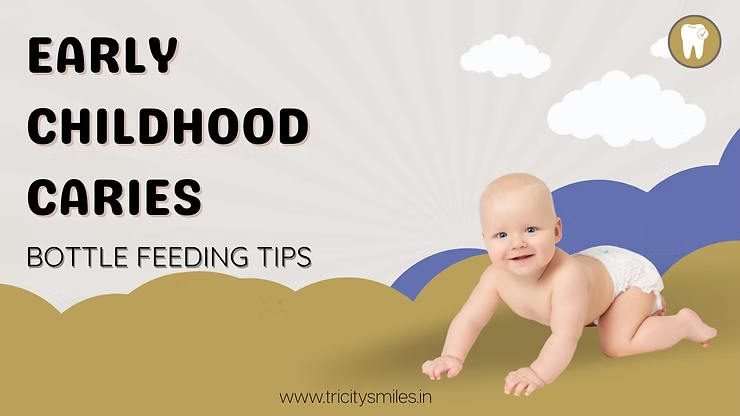
Sleeping with a bottle is one of the biggest causes of early childhood cavities — also known as Baby Bottle Tooth Decay.
Why Does Bottle-Feeding at Night Cause Cavities?
Because sugars from milk, formula, or juice sit on the teeth all night — and saliva levels drop significantly during sleep.
According to AAPD and ADA guidelines¹:
What Happens at Night?
- Babies naturally produce much less saliva
- Sugars from milk, formula, or drinks pool around the teeth
- Cavity-causing bacteria feed on sugars and produce acid
- Acid attacks baby teeth for hours, leading to rapid decay
This is why Baby Bottle Tooth Decay often appears:
- On the upper front teeth first
- Then spreads to molars
- Sometimes progresses so fast that teeth break or get infected
Liquids That Cause Cavities at Bedtime
❌ NOT SAFE in a bedtime or overnight bottle:
- Milk (cow’s or breastmilk as it pools)
- Formula
- Juice
- Sweetened water
- Gripe water
- Glucose drinks
- Syrups
➡ These contain natural or added sugars that feed bacteria.
✔ The ONLY safe nighttime liquid:💧 Water
Is Breast feeding at Night Safe? Here’s the Truth
Breastfeeding itself does NOT cause cavities BUT frequent, on-demand, comfort-feeding at night without brushing can contribute to tooth decay.
AAPD clarifies causes of decay if ²:
- Feeding continues beyond 12 months
- Multiple night feeds occur
- Teeth are not brushed before bedtime
- Breastmilk pools in the mouth during sleeping
📌 Breastfeeding remains healthy and recommended — This guidance is for cavity prevention ONLY.
⚠️ Specific Habits That Increase Risk
Pediatric dentists frequently see cavities linked to:
- Bottle dependence (needing a bottle to fall asleep)
- Feeding to sleep until age 3–4
- Diluted milk (still contains lactose = sugar)
- Gripe water (often sweetened)
- Delayed brushing (skipped when child is cranky)
Signs Your Child Might Already Have Baby Bottle Tooth Decay
Look out for:
- White chalky spots on upper front teeth
- Brown or black stains
- Sensitivity to cold
- Pain when eating
- Bad breath
- Visible holes
- Irritability or poor sleep
- Avoiding certain foods
If you notice any of these, early treatment can prevent pain and save the tooth.
🛑 How to Stop Bottle Feeding at Night
Step 1 — Reduce the amount gradually
Decrease milk/formula by 10–20 ml nightly.
Step 2 — Switch to water over 1–2 weeks
Slowly replace milk with water.
Step 3 — Offer comfort in other ways:
Rocking
White noise
Patting
Pacifier (sleep-only)
Soft singing
Step 4 — Remove the bottle from the crib/bed
Once fully transitioned to water.
Step 5 — Set a final bedtime routine:
Brush → Book → Bed
No milk after brushing.
Most children adapt within 2–3 weeks.
Healthy Night time Routine to Prevent Cavities
- Brush with fluoride toothpaste twice daily (rice-grain smear under age 3)³
- Wipe gums for infants
- No milk after brushing
- Only water in night time bottles/sippy cups
- Bottle should not be used as a sleep prop
- First dental visit by age 1 year
🛡️ Prevention: What Parents Can Do Today
- Brush before bed — every night
- Move milk/bottle earlier in the routine
- Transition to open/sippy cups by 12–18 months
- Avoid sweet drinks entirely
- Visit a pediatric dentist for guidance
Related Services at Tricity Smiles Dentistry
✅ Infant & toddler dental exams ✅ Early cavity detection ✅ Fluoride application ✅ Counselling on feeding & sleep habits ✅ Bottle-weaning guidance ✅ Early childhood caries treatment
⭐ What Our Patients Say
⭐⭐⭐⭐⭐ “We had no idea nighttime bottles were causing cavities. Dr. Sandhu explained everything so gently, and with her help, our daughter transitioned off the bottle easily.” — Mrs. Nita (Mother of Veda)
About Dr. Sandhu & Tricity Smiles Dentistry
Dr. Sandhu is a US-trained dentist with 20+ years of experience, with extensive expertise in pediatric oral health and cavity prevention.
Tricity Smiles Dentistry offers compassionate care, evidence-based counseling, and preventive dental services for infants and toddlers.
📍 House No. 109, Sector 28-A, Chandigarh
📞 +91-7686828000
🌐 https://www.tricitysmiles.in
📍 Google Maps: https://maps.app.goo.gl/WQGZKryUBPBN954F9
❓ FAQs
1. At what age should children stop using bottles? Between 12–18 months, as recommended by AAP & AAPD.
2. Can babies sleep with a bottle of water? Yes — water is the only safe liquid.
3. How fast can baby bottle tooth decay occur? Within months if night feeding + poor hygiene combine.
4. Does breastfeeding cause cavities? Breastfeeding alone doesn’t — risk increases with multiple night feeds + no brushing.
5. What if my child refuses to sleep without a bottle? Gradual weaning works best — follow the step-by-step plan above.