

The short answer
No single flossing tool suits everyone. String floss suits tight contacts between healthy teeth. Floss picks are easiest for children and beginners. A water flosser helps around braces, implants, bridges and gum pockets. Interdental brushes suit wider gaps and receding gums. The right choice depends on your spacing, gums, dental work and comfort.
- A toothbrush cleans the front, back and biting surfaces. The spaces between the teeth need a separate tool.
- A water flosser helps, but it does not fully replace floss or interdental brushes.
- Avoid toothpicks, pins, matchsticks and other improvised tools. They can injure the gums and do not remove plaque.
Why do I need to clean between my teeth?
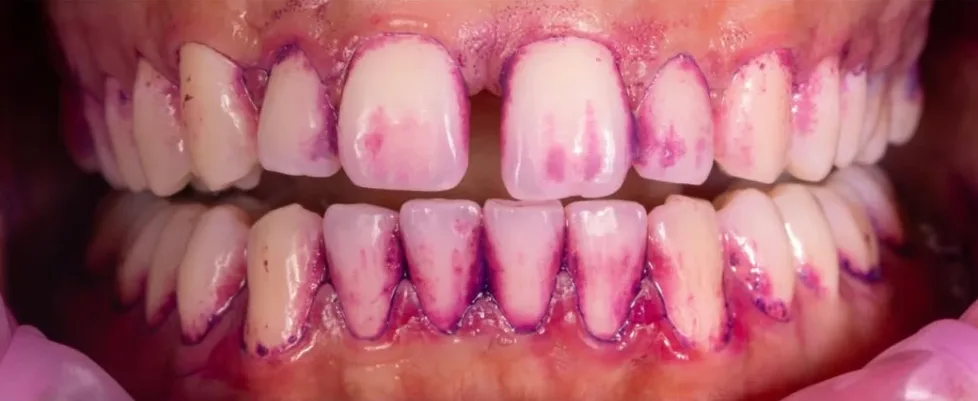
A toothbrush cleans the front, back and biting surfaces of the teeth. It does not reach the spaces between them, or the area just under the gum line, and that is where plaque builds up unseen. Cleaning there every day:
- removes plaque where cavities often begin
- helps prevent inflamed, bleeding gums
- reduces bad breath
- protects fillings, crowns and other dental work
- protects the gums and the bone around the teeth over the long term
Which flossing tool suits which mouth?
| Tool | Suits | Limitation |
|---|---|---|
| String floss | Tight contacts between healthy teeth | Takes good technique |
| Floss picks | Children, and people who find string floss hard to handle | Less adaptable than string floss |
| Water flosser | Braces, implants, crowns and bridges, gum pockets, sensitive gums | Does not fully replace floss or brushes |
| Interdental brushes | Open spaces, receding gums, bridges | The wrong size can injure the gums |
When is string floss the right choice?
String floss is a thin nylon or PTFE thread. It suits adults with tight contacts between the teeth, healthy gums with little recession, and natural teeth without large gaps. To use it:
- Cut about 45 to 50 cm (18 to 20 inches) of floss.
- Wrap it around your middle fingers.
- Guide it gently between two teeth.
- Curve it into a C shape around one tooth.
- Slide it slightly under the gum line.
- Use a clean section for each space.
Used well, it is very effective and reaches the tightest contacts. It does take practice, it is hard for people with limited dexterity, and it is less effective in wide spaces.
Are floss picks as good as string floss?
Floss picks are plastic holders with a short piece of floss already threaded. They are easier to handle, which makes them a good start for children learning to floss, adults with limited hand coordination and anyone who struggles with string floss. Because they are easy, people tend to use them more regularly, children especially.
They are less adaptable than string floss, and they can encourage a forceful technique. Slide the floss gently between the teeth, curve it around each tooth, and do not snap it down into the gum.
For children, picks fit alongside the brushing routine in our guide to electric toothbrushes for children.
Who should use a water flosser?
A water flosser, or oral irrigator, cleans between the teeth and along the gum line with a pressurised stream of water. It is gentle on sensitive gums and reaches places floss struggles with, which makes it useful for:
- braces and fixed retainers
- implants, crowns and bridges
- gum pockets from gum disease
- sensitive gums
- limited manual dexterity
To use it:
- Fill the reservoir with water.
- Start on a low pressure setting.
- Aim the tip at a right angle (90°) to the gum line.
- Trace along the gum margins and between the teeth.
It disrupts plaque and biofilm in gum pockets. On its own it is less effective at tight contacts, and it does not fully replace floss or interdental brushes.
When are interdental brushes better?
Interdental brushes are small cone or cylinder-shaped brushes for open spaces between the teeth. They suit receding gums, the dark triangles that open up between teeth when the gums shrink back (open embrasures), bone loss from gum disease, and bridges or other wide spaces. In those spaces they remove plaque better than floss. To use one:
- Choose the correct size. We can check this for you.
- Insert it gently between the teeth.
- Move it back and forth without forcing.
- Rinse it after each use.
The wrong size can injure the gums, and they do not fit tight contacts.
What should I not use between my teeth?
Many people use whatever is at hand. These remove food for a moment but leave the plaque, which is what causes cavities and gum disease, and some do real harm:
- toothpicks, which can cut the gums, push food deeper under the gum line and make recession worse
- pins, safety pins and needles, which risk serious gum injury, infection and damage to the enamel
- paper, matchsticks and hairpins, whose rough edges injure the gums
- hard plastic sticks or the edge of a card, which can open up spaces between the teeth and damage fillings and crowns
- brushing hard between the teeth, which does not clean properly and can make the gums recede
How do I know which tool is right for me?
Bring the tools you use now to your next check-up. At the clinic we look at the spacing between your teeth and the health of your gums, show you the technique in the chair, and recommend one tool or a combination. As your gums change, the advice changes too. A professional cleaning removes the hardened tartar that home tools cannot, and if your gums are inflamed we may suggest treatment for the gums first.
When the tool fits, people usually notice less bleeding, fresher breath, healthier-looking gums and cleaning that feels more comfortable. Over time there are fewer cavities between the teeth.
The usual mistakes are a tool that does not suit your mouth, flossing too hard, which irritates the gums and makes them bleed, and poor technique. Whatever you choose, clean between your teeth every day and be gentle.
This article is general information and does not replace an examination. What is right for you depends on your own teeth and health.