

The short answer
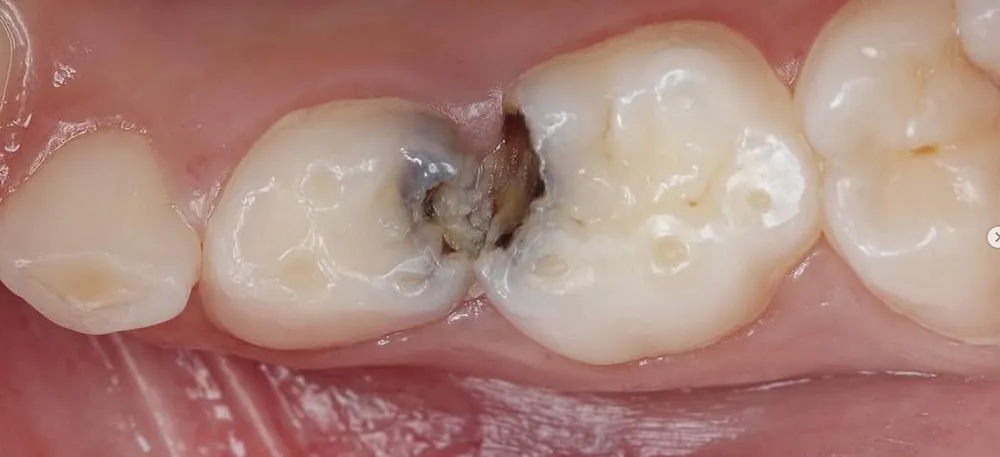
Tooth decay goes through five stages. It starts as a chalky white spot where acid has drawn minerals out of the enamel, then becomes a cavity in the enamel, spreads into the softer dentin, reaches the nerve, and can end in an abscess. Only the white-spot stage can reverse. After that, the tooth needs treatment.
- Bacteria in plaque turn sugar into acid, and the acid dissolves the tooth.
- Baby teeth have thinner enamel, so decay spreads faster in children.
- Fluoride toothpaste, fewer sugary snacks, no bottle at bedtime and check-ups every 6 months are the main ways to prevent it.
What causes tooth decay?
Bacteria in plaque feed on sugar and produce acid. The acid dissolves minerals from the enamel. When that happens often enough, the softened enamel breaks down into a cavity, which spreads into the deeper layers of the tooth and can lead to pain, infection or losing the tooth.
Baby teeth have thinner enamel than adult teeth, so, as the American Academy of Pediatric Dentistry notes, decay spreads faster in children. Untreated cavities affect chewing, speech and growth, and can reach the adult teeth developing underneath.
What are the five stages of tooth decay?
| Stage | What happens | What you may notice |
|---|---|---|
| 1. White spot | Acid draws minerals out of the enamel | A chalky white patch. No pain. This stage can reverse. |
| 2. Enamel decay | A small cavity forms in the enamel | Usually no pain yet |
| 3. Dentin decay | The decay reaches the softer dentin under the enamel | Sensitivity begins |
| 4. Pulp involvement | The decay reaches the nerve and infects it | Severe pain. The nerve needs treatment. |
| 5. Abscess | The infection spreads from the tooth into the bone and tissues | Swelling and fever |
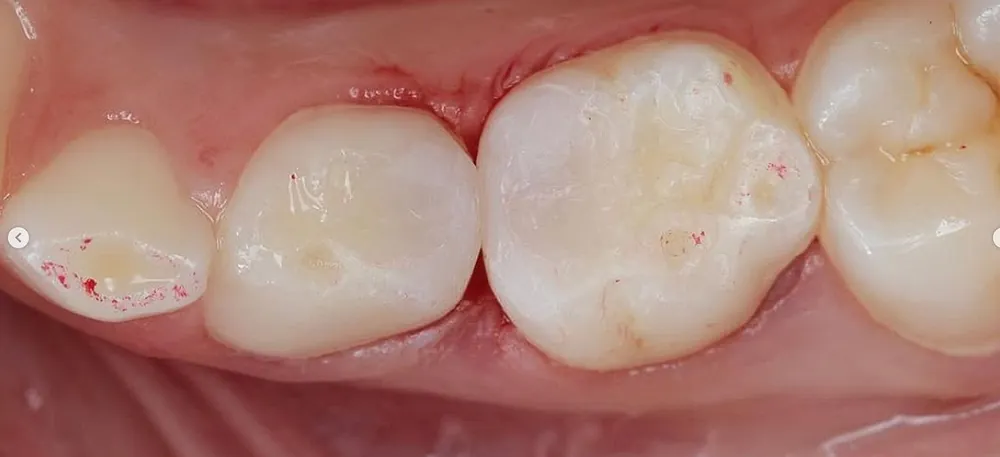
The earlier the stage, the smaller the treatment. A white spot can be reversed with fluoride, such as fluoride varnish at a check-up, and better habits. An early cavity needs only a small filling. Later stages need crowns, nerve treatment (pulp therapy) or removal of the tooth, and an abscess can mean emergency care. When decay reaches the nerve of a baby tooth, a root canal on a milk tooth can often save it.
Does tooth decay always hurt?
Not at first. The first two stages are usually painless, which is why decay is so easy to miss. Once it reaches the dentin or the nerve, the pain can become sharp, throbbing or constant. In children it disturbs sleep, eating, behaviour and mood.
What happens if tooth decay is left untreated?
The American Dental Association notes that untreated cavities raise the risk of nerve infection, abscess and tooth loss. Other effects build up over time:
- An abscess: infection of the nerve, swelling of the face, pus and fever. Severe cases may need antibiotics, hospital admission or emergency treatment.
- Damage to the adult teeth. Infection in a baby tooth can reach the adult tooth developing underneath and leave it with enamel defects, discolouration or weaker enamel.
- Trouble eating. When chewing hurts, children often eat only soft food, which affects nutrition.
- Bad breath and, in young children, delayed speech.
- Missed school, poor concentration, irritability and tiredness.
- Crooked adult teeth, when a baby tooth is lost early and the space closes up.
- In adults, gum disease and a smile people feel less confident about.
Rarely, the infection spreads into the face and neck (facial cellulitis or Ludwig's angina) and can affect breathing. That needs emergency care straight away.
Why is untreated decay so common in Indian children?
National oral health surveys in India have found cavities in many children by the age of 5 or 6. The main reasons are:
- diets high in sugar
- bottle feeding at night
- a first dental visit that comes late
- limited awareness of early dental care
How can I prevent tooth decay?
- Brush twice a day with fluoride toothpaste: a smear up to age 3, and a pea-sized amount from 3 to 6. Our toothpaste guide covers older children and adults.
- Watch how often sugar is eaten. How often matters more than how much.
- No bottle feeding during sleep. Milk left on the teeth speeds up decay.
- Rinse or brush after sticky snacks. Biscuits, jaggery, raisins, cereals and sticky sweets cling to teeth for hours.
- Help or supervise your child's brushing until about age 6 to 8.
- Have a check-up every 6 months, or sooner if there is pain or a new symptom.
How can the clinic help at each stage?
A regular check-up finds decay while it is still small. At Tricity Smiles we treat every stage: fluoride treatment and sealants, fillings, nerve treatment and stainless steel crowns for baby teeth, space maintainers when a baby tooth is lost early, and emergency care for pain or swelling.
This article is general information and does not replace an examination. What is right for you depends on your own teeth and health.